In many companies, the contract review process looks similar. A sales manager sends the contract to a lawyer. Then the lawyer reviews the terms, sometimes returns the document for revisions. After that, the contract goes through another review process. If the document contains non-standard terms, the process may be repeated several times.
As a result, contract reviews often take one or two days. For complex contracts, it can take even longer. During this time, the deal can stall, and the sales team continues to wait for a response. The more contracts a company processes, the greater the burden on the legal team.
The problem is that lawyers are forced to manually review dozens of documents. The risk of missing deviations from standard terms increases. Sometimes these deviations may be minor wording, but these details often become the source of legal or financial risks.
Therefore, companies are looking for ways to AI legal automation. This is where interest in AI solutions comes in.
Why Standard AI Tools Don’t Solve Contract Workflows
Many modern tools can indeed analyze contract text. They can summarize the document or highlight key points. However, this can be insufficient for the actual approval process.
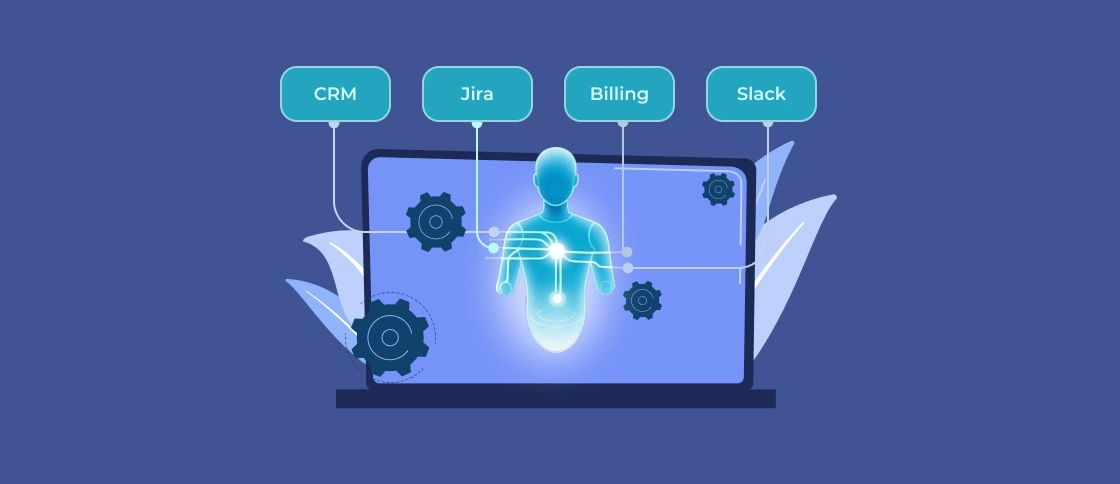
A contract is not an isolated document. It is linked to the CRM transaction, billing, internal legal rules and the company’s approval processes. When AI operates solely as a text analysis tool, it doesn’t take this context into account. Ultimately, the lawyer must review the terms and compare them with company policies.
In essence, standard AI tools help speed up contract review but they don’t manage the review process itself.
The Real Problem: Contract Risk Appears Across Systems
In practice, contract risk is rarely determined only by the document’s text. It emerges at the intersection of many data sources. For example, discount terms may depend on deal parameters in the CRM. Financial obligations may depend on the pricing model in the billing system. SLAs or party responsibilities may depend on the company’s internal legal templates.
If a contract is examined separately from this data, it’s impossible to fully assess the risk. This is why manual review takes so much time. A specialist collects information from many systems to understand the context.
An AI contract review automation solution that speeds up review must work with the contract text and those data sources.
Solution: AI Contract Review Agent
Instead of a separate text analysis tool, you can use an AI agent that becomes part of the AI contract review process.
This agent first analyzes the document. It identifies key terms and generates a brief overview of the contract. But the work doesn’t stop there. The AI agent compares the contract terms with the company’s internal policies. It also verifies the transaction parameters and assesses the potential risk.
If an AI agent detects non-standard terms in the document, it automatically generates a task for a lawyer or manager. A brief analytical report is generated along with the task, showing which clauses require attention and why.
As a result, the specialist doesn’t need to read the entire contract. They can immediately see the sections that could actually impact the company’s risks.
How the Architecture Works
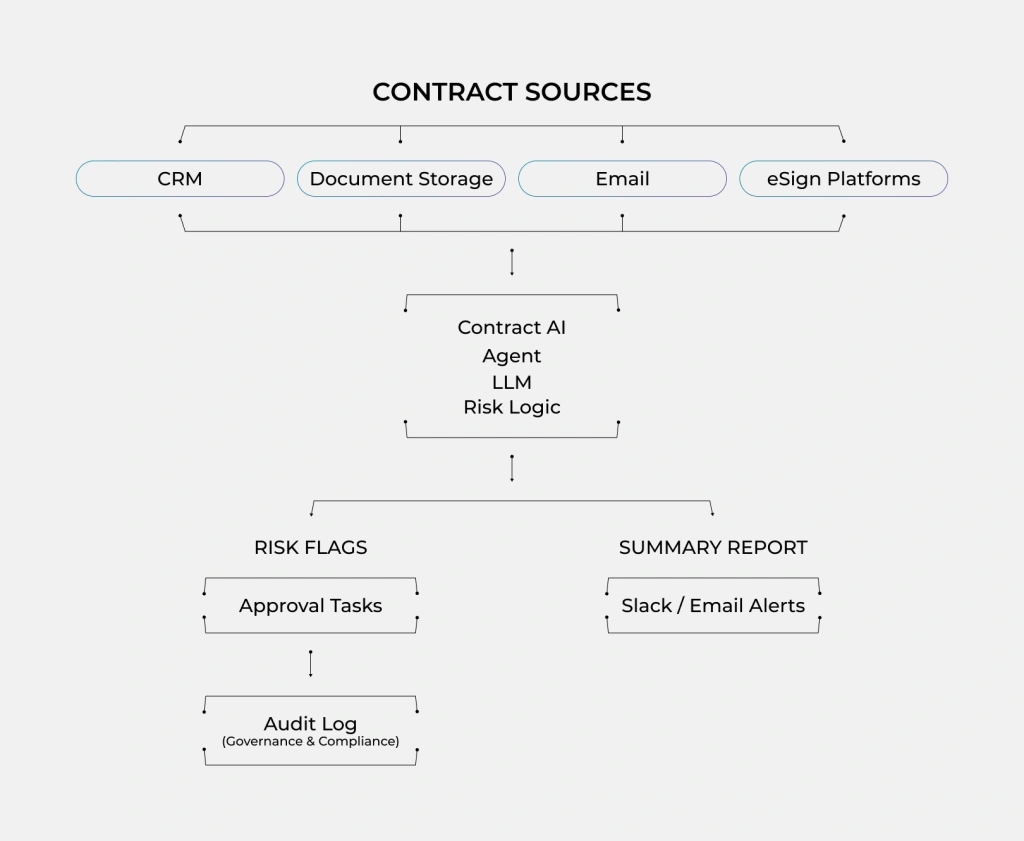
From a technical point of view, the system is built as a layer between document sources and business processes.
Contracts are included in the system from document repositories or electronic signature platforms. The agent analyzes the text, compares the terms with internal rules and makes a conclusion. If it detects risks, the system notifies the responsible employees.
All AI agent actions are recorded in the operation log. This allows for tracking of the data used and the solutions proposed by the system.
Data and Integrations Required
This system requires connecting many data sources. They typically include document repositories, electronic signature systems and CRM systems that store transactions. Internal contract templates and company legal rules are also used.
When these sources are combined, the agent gains context that it cannot get from the document itself. This allows for more accurate identification of potential risks and accelerates the legal team’s work.
Human-in-the-Loop: Where AI Must Not Decide Alone
Despite the potential for contract review automation, final decisions in legal matters are always made by humans.
AI can identify deviations from standard terms or note unusual wording. It can offer a risk assessment and prepare a brief explanation. But a human decides whether these terms can be accepted
This is especially important for financial obligations or the legal liability of the parties. In these situations, the system operates on a human-in-the-loop principle. AI prepares analysis and recommendations, and a human approves or rejects the decision.
This approach speeds up the review process while maintaining full control.
KPI and Realistic ROI
Companies implementing AI agent support for contract review often see a significant reduction in review time. Teams spend less time reading documents because the system already identifies risk areas.
This also reduces the likelihood of missing important terms. The analysis is performed automatically and consistently for every document. Another benefit is process transparency. Thanks to the transaction log, the company can always see how decisions were made and what data was used.
This helps speed up deal approvals and reduce the workload on legal teams.
How Softacom Can Help
If your team processes dozens or hundreds of contracts per month, AI agent support can speed up the process. It can reduce the workload on your legal team.
Our AI software implementation services help companies create custom AI agents that analyze contracts and identify risks. They maintain a full audit trail and human oversight.
Schedule a short discovery call to discuss how such an agent could work within your infrastructure.