- The Main Sign of the Problem: When Old Systems Become a Bottleneck
- Rising Costs of Maintaining Outdated IT Systems
- When Engineers Maintain the Past Instead of Creating the Future
- Architecture Becomes a Growth Constraint
- When Legacy System Becomes a Business Problem
- Why a Complete Rewrite Is Not Always the Solution
- A More Practical Approach: Support First, Upgrade Options Later
- Conclusions

Many product companies evaluate the health of their systems by a simple criterion: does it work or not?
Say the application consistently serves users, it doesn’t cause any serious incidents and generates revenue. A lot of chances are, the company will postpone upgrades. It will prioritize new features, sales, and product development.
But over time, another problem arises. The system continues to work, but each new task requires more effort. Releasing features takes longer because the team spends more resources maintaining existing code. Competitors respond more quickly to market demands. At this point, legacy software stops being simply technical debt. Now, it directly impacts the product’s ability to evolve and becomes a software modernization challenge.
The Main Sign of the Problem: When Old Systems Become a Bottleneck
Most product companies don’t wake up one day and think, “Our system has become legacy.” It happens gradually.
At first, your developers spend two weeks on a new feature instead of one. Then, a release requires several testing cycles because no one is sure which parts of the system might be affected. Then the team starts postponing useful improvements because the implementation costs too much.
The product seems stable but its development rate begins to slow down.
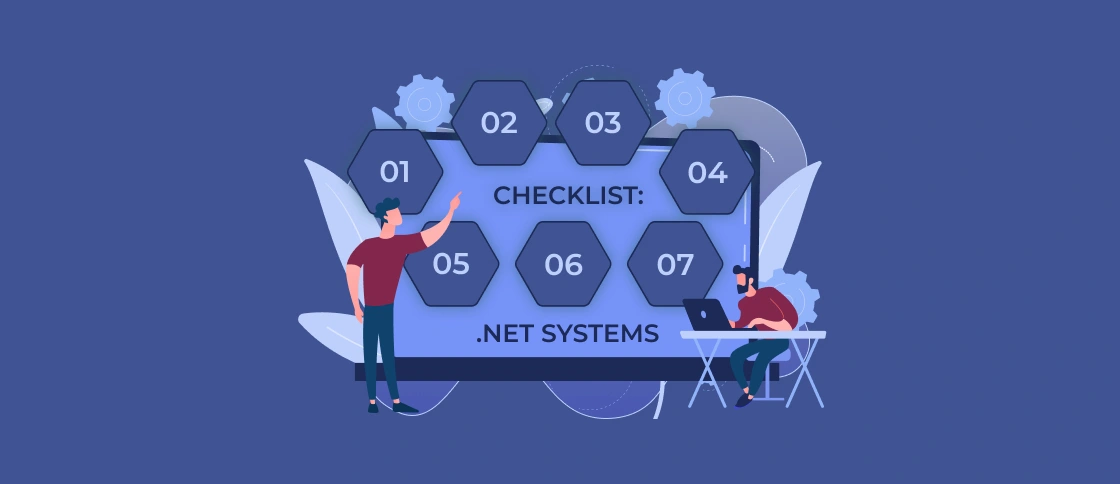
This most often manifests itself through these 7 characteristic signs:
- developers take more time to deliver new features than before
- the company can’t estimate development and growth
- releases are accompanied by additional testing and caution
- the team avoids changes to certain parts of the system
- you postpone useful initiatives due to the high complexity of implementation
- product roadmap discussions start with technical limitations
- support work consumes more time than innovation
This scenario is common to a wide variety of products – from smaller and older Delphi applications and .NET Framework systems to large enterprise solutions that now require a clear legacy application modernization strategy. But the problem is rarely related to a specific technology. More often, the cause lies in accumulated architectural limitations that gradually complicate any changes.
Rising Costs of Maintaining Outdated IT Systems
This is one of the most common reasons software product companies start evaluating legacy system modernization options. When a product has been in development for ten, fifteen, or twenty years, its codebase begins to reflect the entire history of the business. Each new team leaves its mark. They make architectural decisions to address challenges that they are facing right now. Business logic becomes more complex, and documentation gradually ceases to reflect the state of the system. As a result, even a small change can affect many components.
Let’s imagine a situation: a product team wants to add a new customer experience. From a business perspective, the task seems fairly straightforward. But analysis makes it clear that the change affects the user interface, business logic, integrations with external systems, reports, and data structure. The work could take a few days, but it turned into weeks.
It’s important to understand that the problem isn’t the team’s productivity, as the .NET or Delphi developers have not slowed down. But the system requires more and more effort to make even relatively small changes.
When Engineers Maintain the Past Instead of Creating the Future
Another characteristic of mature legacy is how the team spends its time. In the early stages, most resources are usually focused on product development. Engineers create new features, experiment, and help the business respond quickly to market demands.
But the balance shifts over time. They put more and more effort into fixing defects and analyzing complex dependencies. Now, they maintain legacy components and think about what to do with infrastructure limitations. Even testing and releasing require more work if the system is poorly suited for automation.
At some point, the team finds itself spending a lot of time not on creating the future product, but on maintaining its legacy.
The consequences for the business are quite tangible. The company keeps investing large budgets in development, but delivers fewer opportunities for clients. While the team remains nominally the same size, its actual ability to move the product forward is gradually declining.
Architecture Becomes a Growth Constraint
Early in a product’s life, architectural compromises are often justified. They allow for faster time to market, testing of hypotheses and collecting customer feedback. Many successful products have grown thanks to such decisions precisely. The problem arises later.
What helped develop ten years ago may begin to limit development today. Adding new integrations requires significant changes to existing code. Transitioning to modern interfaces proves more difficult than expected. Scaling becomes expensive, and implementing new technologies requires numerous workarounds.
Even the nature of internal discussions gradually changes. If earlier, you were evaluating new initiatives through the lens of customer value, now you have a different question: “Can the current system support this?”
This is an important signal. When software architecture begins to define the boundaries of business capabilities, the problem extends far beyond technical debt.
When Legacy System Becomes a Business Problem
Not every legacy system requires immediate modernization. Many products built on Delphi, .NET, and other mature technologies have been operating successfully for decades and still continue to generate revenue. The age of a technology alone is rarely a reason for change.
There is something else far more important. If the timelines for implementing new features are constantly growing, estimates are unpredictable, and the team avoids changes to certain parts of the system, this is already impacting the business. The problem becomes especially noticeable when a few specialists hold key expertise, and you delay strategic initiatives due to technical limitations.
Here are typical signs that legacy is already impacting business results:
- the speed of introducing new features is slowing
- the cost of changes is increasing
- a limited number of specialists know the system
- legacy software support takes up more resources than development
- technical limitations hinder the launch of new initiatives
- architectural decisions influence the company’s business plans
In this situation, the question is whether the existing system helps the company grow or prevents it.
Why a Complete Rewrite Is Not Always the Solution
When limitations become obvious, many companies start discussing a complete rewrite. At first glance, this seems like a logical solution: get rid of the old code and build a new system with a modern software architecture instead. But this approach is not the safest. Especially if the product has been around for many years. It contains complex business logic and already serves an active customer base. Over the years, it accumulates hundreds of nuances and business rules, which are not always documented but are critical to users. You can’t just break it.
A complete rewrite creates its own risks. The company can spend years developing a new version and encounter unexpected problems when migrating the accumulated logic.
For this reason, many product companies are taking a more cautious approach. Before making major decisions, they try to understand the real limitations of the system and determine what changes are truly necessary.
A More Practical Approach: Support First, Upgrade Options Later
The most successful product modernization projects rarely begin with a decision to replace everything at once. Usually, the first step is an analysis of the current situation. The team tries to understand which parts of the system are truly limiting product development. They figure out where the main risks and which changes could bring the greatest business benefit. This approach allows decisions to be based on facts, not assumptions.
This also allows for a phased software modernization plan. The company continues to support existing customers and releases new features. It also simultaneously reduces the technical limitations of the most problematic components.
Instead of a single large-scale and risky project, you have a coherent system development strategy. It is better controlled from both a technical and business perspective.
| Full Rewrite | Phased Modernization |
| High risk | Lower risk |
| Long delivery gap | Continuous delivery |
| Large upfront investment | Incremental investment |
| Business disruption | Business continuity |
| Uncertain timeline | Predictable roadmap |
Conclusions
The main problem with legacy systems is rarely that they stop working. More often, they continue to perform their purpose but start slowing down product development. Each new feature requires more effort. The team spends more time supporting the existing solution. Architectural limitations start to influence business priorities and strategic decisions.
At this point, legacy becomes a factor influencing the product’s competitiveness. For this reason, for many product companies, the most sensible first step is not a complete rewrite, but an understanding of the system’s current limitations. They should have available development options and the possibilities for incremental legacy software modernization.